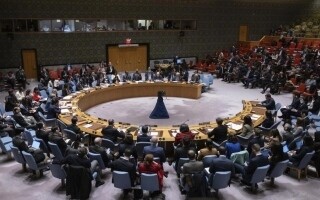
Bahrain's Foreign Minister, Dr. Abdullatif bin Rashid Al Zayani, confirmed that what began as Iranian threats to ships transiting the Strait of Hormuz has evolved into a threat to the entire world. He stressed that time has become a decisive factor in addressing this escalating crisis, which has become a real threat to global stability, food security, and the principles of international law. Al Zayani explained that since February 28, oil tanker traffic through the Strait of Hormuz has decreased by more than 90%, noting that the implications of this situation are no longer confined to energy markets or shipping lanes but extend to global food security, with an anticipated worsening of fertilizer shortages and rising hunger risks. He pointed to UN warnings that an additional 45 million people could face acute hunger and about 4 million people in the Arab world could be pushed into poverty if the situation continues. Al Zayani affirmed that the scale of global risks is what prompted the Kingdom of Bahrain to introduce a draft resolution before the Security Council, clarifying that what is happening is not a regional dispute but a global emergency requiring a comprehensive international response. The Security Council has demonstrated its awareness of the gravity of the situation through Resolution 2817, which received an unprecedented co-sponsorship from 136 member states, sending an unambiguous message that Iran's actions are illegal and must cease. However, Iran has not complied—which makes further Council action imperative. Al Zayani indicated that every day that passes without action brings the world closer to a crisis whose effects will be measured by failed harvests, rising hunger rates, and renewed instability in the most vulnerable countries, emphasizing that closing the strait does not target a specific entity but poses a direct threat to countries of the Global South, which will bear the heaviest burden of its consequences. The Foreign Minister stressed the need for immediate action, warning that the available window is narrowing day by day, and that continued disruption of shipping means delays in the delivery of vital energy, food, medicine, and fertilizer supplies on which millions depend. He explained that the draft resolution before the Security Council represents a law-based, coordinated response aimed at providing the clarity and coordination needed to counter Iran's violations of international law and its threats to maritime navigation in the Strait of Hormuz. Al Zayani confirmed that the draft is not intended to escalate but constitutes a framework to prevent a broader collapse of the international system, by emphasizing the need to protect freedom of navigation and transit passage rights, deterring any further attacks, and upholding full compliance with international law and international humanitarian law. He pointed out that inaction in the face of this crisis sends a dangerous message that vital pathways in the global economy can be threatened without consequences, noting that the Security Council conducted in-depth consultations to arrive at a resolution that reflects the magnitude of the current challenge. He added that Bahrain's presidency of the Security Council focused on achieving a unified Council position, and the postponement of the vote was to allow for an international consensus, affirming that Bahrain will continue its diplomatic efforts in the coming days to achieve this goal. Al Zayani called on the Security Council to vote in favor of the draft resolution, stressing that the Council's credibility is hinged on its readiness to act when the international legal system is challenged by a blatant threat. The Strait of Hormuz is an international waterway belonging to the world, and the Council must act on this basis.